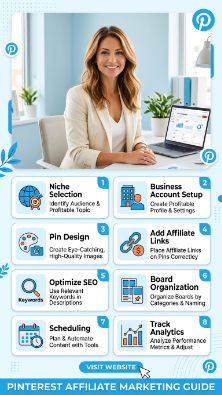
Turn Pins into Profit in 2026
The world of affiliate marketing is constantly shifting, with new platforms emerging and algorithms changing overnight. Yet, amidst this whirlwind, one platform has quietly evolved into a powerhouse for sustainable, long-term income: Pinterest.
Often misunderstood as just a digital scrapbook for recipes and DIY projects, Pinterest is actually a visual search engine with over 600 million monthly active users actively looking for ideas, solutions, and products to buy. Unlike other social media platforms where content disappears in hours, a single Pin can drive traffic and generate affiliate sales for months, or even years, after you publish it. With 80% of weekly users making purchasing decisions based on what they discover on Pinterest, it offers an unmatched opportunity for affiliate marketers.
This comprehensive guide will teach you everything you need to know to build a profitable Pinterest affiliate marketing strategy in 2026, from foundational setup to advanced growth tactics.
1. The Mindset Shift: Why Pinterest is a Game-Changer for Affiliates
Before diving into the tactics, it’s crucial to understand why Pinterest is different.
A Search Engine, Not a Social Media Platform
Many creators approach Pinterest with an Instagram or TikTok mindset, focusing on followers, aesthetics, and daily engagement. This is a mistake. Pinterest is not a social media platform; it is a visual discovery engine. Users arrive with high intent, typing in search queries like “small kitchen organization ideas,” “budget-friendly capsule wardrobe,” or “best home office desk chairs.” They are planning, dreaming, and actively looking to make decisions.
The most successful Pinterest affiliate marketers think like SEO specialists, not social media influencers. They focus on keywords, search intent, and creating content that provides genuine value to the user. As Pinterest strategist Laura England puts it, “Pinterest behaves much more like Google than Instagram”.
The Power of Long-Term Content
This is perhaps the most compelling reason to use Pinterest for affiliate marketing. On platforms like TikTok or Instagram, your content is ephemeral. On Pinterest, it’s an asset. According to Tailwind’s 2025 Benchmark Study, over 60% of Saves were from Pins over a year old. This means that a Pin you create today can continue to surface in search results, get saved, and drive clicks to your affiliate content for many years. This creates a powerful compounding effect where your traffic and income grow exponentially over time.
High Buyer Intent & Spending Power
Pinterest users are not just casually browsing—they are in a shopping mindset. This makes them prime targets for affiliate offers. The platform’s users spend 2x more per month on shopping compared to users on other social platforms, and a significant portion of them fall into high-income households. With Pinterest increasingly attracting a Gen Z audience that values authentic recommendations, the potential for affiliate revenue is immense.
2. Setting Up Your Pinterest Account for Success
To start earning, you need a proper foundation. Follow these steps to set up your Pinterest profile for maximum visibility.
Create a Pinterest Business Account
If you’re serious about affiliate marketing, a personal account won’t cut it. You need a Pinterest Business Account. It’s free and grants you access to essential features like Pinterest Analytics, advertising tools, and the ability to enable Rich Pins. You can easily create a new business account or convert your existing personal account.
Build a Keyword-Rich Profile
Your profile is the first signal you send to Pinterest about your niche. Optimize it by:
- Profile Name & Bio: Include high-volume keywords that describe your niche. For example, instead of “Cooking Blog,” use “Healthy Recipes & Meal Prep Ideas.”
- Board Creation: Create 6-10 boards that cover subtopics within your niche. Use clear, keyword-rich titles and descriptions for each board. For instance, if your niche is home decor, create boards like “Small Living Room Decor Ideas,” “Budget-Friendly Home Office,” or “Minimalist Bedroom Design”. This helps Pinterest understand your content and show it to the right users.
Enable Rich Pins (Crucial Step)
Rich Pins are a must for any affiliate marketer. They automatically sync information from your website directly to your Pins. For example, if you link to a product review, a Rich Pin will show the article title, description, and author. If you link to a product page, it can display real-time pricing and availability. This extra information makes your Pins more informative, professional, and clickable, boosting your trust with users. While the setup requires adding meta tags to your website, it’s a one-time process that pays dividends in the long run.
3. The Foundation: A Website (Your Home Base)
This is non-negotiable for long-term success. While you can technically add an affiliate link directly to a Pin, this is a risky and unsustainable strategy. Pinterest actively discourages linking directly to affiliate products, as it provides little value to the user.
Your website serves several critical purposes:
- Provides Value: You can write a detailed review, a helpful tutorial, or a product roundup that genuinely helps the reader. This builds trust and increases the likelihood they will click your affiliate link.
- Builds an Asset: Your website is a property you own. You can build an email list, track user behavior, and create a resilient business that doesn’t depend solely on Pinterest’s algorithm.
- Ensures Compliance: A website gives you a legitimate and valuable platform to link from, which is favored by both Pinterest’s and the FTC’s guidelines.
Your Pins should always link back to your high-quality blog posts or landing pages, which then contain your affiliate links. This approach is universally recommended by experts and is essential for building a sustainable income stream.
4. Keyword Research: The SEO of Pinterest
Remember, Pinterest is a search engine. To get your Pins found, you must master keyword research. The goal is to understand the exact phrases and questions your target audience is typing into the Pinterest search bar.
How to Find the Best Keywords
- Pinterest Trends: This is your most powerful tool. It’s Pinterest’s own free tool that lets you see what users are searching for, compare the popularity of different terms, and identify seasonal peaks in interest. Knowing what will be trending before it trends allows you to create content and schedule Pins early, positioning you at the top of search results when demand surges.
- Pinterest Search Bar: Start typing a core term related to your niche into the Pinterest search bar and look at the auto-suggestions. These are based on real user queries and are pure gold for finding long-tail keywords (longer, more specific phrases). For example, if you type “skincare,” you might find suggestions like “skincare routine for dry skin,” “best affordable skincare,” or “skincare products for acne.”
- Analyze the Competition: Search for your main keywords and see what content is already ranking. Pay attention to the keywords used in the titles and descriptions of top-performing Pins.
Building a Keyword Strategy
Your goal is to find keywords that are relevant to your niche, have a real search volume, and reflect user intent. The best strategy is to combine broad topics with specific, long-tail keywords that indicate a desire to buy or take action.
- Broad Topic Keywords: “Home office” (high competition, vague intent).
- Long-Tail Keywords: “Ergonomic home office desk accessories” (lower competition, clear intent).
- Buyer-Intent Keywords: “Best affordable mechanical keyboards for programmers” or “Budget-friendly home office chairs under $200” (very specific and ready-to-buy).
By creating content and Pins optimized for this mix of keywords, you can capture traffic at every stage of the buyer’s journey.
5. Creating High-Performing Affiliate Pins
Once you have a website and keyword strategy, it’s time to create Pins that drive clicks and conversions.
Design Principles for Clicks
- Use High-Quality Visuals: Your image is the first thing users see. Use bright, clear, and visually appealing photos or graphics. If you can, use your own high-quality product photos in lifestyle settings rather than just stock imagery.
- The 2:3 Aspect Ratio: Pinterest favors vertical images with a 2:3 ratio (e.g., 1000 x 1500 pixels). These take up more space in the feed and grab more attention.
- Add Clear Text Overlays: Don’t leave users guessing. Add concise, easy-to-read text on your image that highlights the main value proposition. Use bold fonts and contrasting colors to ensure it’s readable.
- Include a Call-to-Action (CTA): Encourage users to take the next step with a clear CTA on the image or in the description, such as “Read More,” “Shop Now,” “Get the Look,” or “Discover the Best Gear”.
The “Fresh Pin” Strategy
The days of just re-pinning existing content are over. Pinterest’s algorithm now prioritizes Fresh Pins, which are original Pins you create yourself. To maximize your reach, create multiple unique Fresh Pins for the same piece of content. Each Pin should have a different image, a different text overlay, and a slightly different description targeting a different keyword or angle.
For example, for a blog post about “home office chairs,” you could create:
- Pin 1: Image of the chair itself with the overlay “Best Ergonomic Office Chair.”
- Pin 2: Lifestyle image of someone working in the chair with the overlay “Comfortable Work From Home Setup.”
- Pin 3: Text-based graphic listing key features like “Supportive, Durable, Stylish.”
By creating 3-5 different Pins per article, you massively increase your chances of Pinterest showing your content to a wider audience across different searches.
Different Pin Formats
Don’t limit yourself to static images. Experiment with different formats:
- Video Pins: Short, engaging videos (e.g., product reviews, tutorials, unboxings) are gaining traction and often see higher engagement rates than static images.
- Idea Pins: These are multi-page Pins that allow you to tell a story or create a step-by-step guide. They are great for tutorials and can be very engaging.
- Carousel Pins: Allow users to swipe through multiple images on a single Pin. Perfect for showcasing product features or an outfit collection.
Writing Optimized Descriptions
Your Pin description is a crucial place for SEO. Write a description that is natural, engaging, and includes your target keywords early on. Clearly explain what the Pin is about and what value the user will get when they click through.
Crucially, always include a transparent disclosure for your affiliate links. As required by Pinterest and the FTC, you need to clearly state that you may earn a commission. Simple and early disclosures like #ad, #affiliate, or This post contains affiliate links are essential for building trust and staying compliant.
6. The Strategy: Scheduling, Posting, and Engagement
Creating great Pins is only half the battle. You need a consistent strategy to get them seen.
Consistency Over Quantity
Pinterest rewards consistency. Pinterest itself recommends trying to publish as many as 5-25 new Fresh Pins per day. This might sound daunting, but it’s achievable by creating multiple Pins for each piece of content. The goal is to maintain a steady stream of new content, which signals to the algorithm that you are an active and valuable creator.
Using a Scheduling Tool (Highly Recommended)
Manually posting 10+ times a day is nearly impossible. This is where scheduling tools like Tailwind come in. Tailwind is a Pinterest-approved partner and is mentioned across all expert guides. It allows you to:
- Batch Create & Schedule: Design a week’s worth of Pins in a single session and schedule them to be posted at the best times for your audience.
- Optimize Timing: Use features like SmartSchedule to automatically post when your specific audience is most active, eliminating the guesswork.
- Recycle Evergreen Content: Use SmartLoop to automatically reshare your best-performing, evergreen Pins, ensuring they never lose momentum.
Engagement and Community
While keyword optimization is paramount, engagement still matters. Pinterest uses engagement signals (saves, clicks, comments) to determine how valuable your content is. You can encourage this by:
- Saving and Commenting: Engage with other users in your niche by saving their Pins and leaving thoughtful comments. This gets you on their radar and builds a network of like-minded creators.
- Using a Growth Tool: Services like Tailwind Turbo are communities where you can submit your best Pins, and other users will engage with them. This can help your top-performing content gain the “early traction” it needs to get a boost from the algorithm.
A good content ratio to follow is the 80/20 rule: 80% of your content should be valuable, helpful, and non-promotional (tutorials, tips, inspiration), and only 20% should be direct promotional or affiliate content. This builds trust and prevents your profile from looking like a spammy advertisement.
7. Finding and Joining Affiliate Programs
With your strategy in place, you need products to promote.
Where to Find Affiliate Programs
- Amazon Associates: The most well-known program, especially great for physical products. However, you must strictly follow their rules, as some regional policies have restrictions on Pinterest promotion. It’s often safer to link to a blog post and include your Amazon link there.
- Individual Brand Programs: Many brands in your niche will have their own affiliate programs. Search for “[Brand Name] affiliate program.”
- Affiliate Networks: These are platforms that connect you with thousands of advertisers. Popular ones include Awin, ShareASale, CJ Affiliate, and Rakuten. They are a great place to find programs across almost any niche.
Choosing the Right Products
It’s not just about the highest commission rate. Consider:
- Relevance: Does the product fit your niche and genuinely help your audience?
- Quality: Would you recommend it to a friend? Promoting high-quality products builds trust.
- Commission Structure: What is the commission percentage? Is it a flat fee or a percentage of the sale? Do they offer a cookie duration that gives you credit for a sale if the user buys later?
- Conversion Rate: High ratings and positive reviews (social proof) make products much easier to sell.
8. Advanced Tips and Common Mistakes
Avoid These Pitfalls
- Direct Linking to Affiliate URLs: As highlighted, this is a major mistake. Always link to your own content first. This is the number one rule for building a sustainable business on Pinterest.
- Link Cloaking: Never use URL shorteners like Bit.ly to hide your affiliate link. Pinterest’s guidelines clearly forbid this, and doing so can get your account suspended. Use the exact link provided by your affiliate program.
- Posting the Same Pin Everywhere: Don’t just save the same Pin to multiple boards. This is considered spammy. Instead, create “slight variations” of your Pins to distribute across different relevant boards.
- Impatience: Pinterest is a long game. Pins often take 2-3 months to gain momentum. Don’t quit after a week of slow traffic. Be patient, keep creating Fresh Pins, and your efforts will compound over time.
Leverage Seasonality
Pinterest users plan ahead. They are searching for “fall decor ideas” in August and “New Year’s fitness challenges” in November. Use Pinterest Trends to identify these seasonal peaks and create content at least a month in advance. This positions you perfectly to capture the surge in search demand.
Track Your Performance
Use Pinterest Analytics to see which of your Pins are getting the most impressions, saves, and clicks. Use your affiliate network’s dashboard to see which products are actually converting into sales. This data is invaluable. It shows you what’s working so you can double down on successful strategies and scrap what’s not.
Conclusion
Pinterest affiliate marketing offers a unique opportunity to build a passive income stream that grows over time. Unlike other platforms, the content you create continues to work for you long into the future. It is a powerful combination of SEO, high-quality visual content, and a user base with a strong intent to buy.
By following the principles in this guide—shifting your mindset to see Pinterest as a search engine, building a website as your home base, mastering keyword research, creating Fresh Pins, and being patient and consistent—you can build a powerful and resilient affiliate marketing business.
The journey requires effort and patience, but the potential for long-term, compounding success is immense. Start building your Pinterest assets today, and you’ll be thanking yourself for years to come.