Part I: The Philosophy of Passive Income
Before diving into the tactics, you must understand the two primary inputs required to generate passive income: Capital and Time.
- Capital-Intensive Strategies: These require money upfront. You use your existing wealth to buy assets that produce more wealth. (e.g., Dividend stocks, Real Estate).
- Time-Intensive Strategies: These require “sweat equity.” You spend hundreds of hours building an asset that eventually pays you back. (e.g., Starting a YouTube channel, writing a book).
The goal for most people is to use time to create assets that generate capital, then reinvest that capital into assets that require even less time. This is the “Wealth Flywheel.”
Part II: Financial Market Strategies (Low Effort, High Capital)
Investing in the financial markets is the most traditional way to earn passive income. Once set up, it requires the least amount of physical labor.
1. Dividend Growth Investing
Dividend stocks are shares in companies that pay out a portion of their earnings to shareholders regularly. Instead of just hoping the stock price goes up, you receive cash payments (usually quarterly).
- The Strategy: Focus on “Dividend Aristocrats”—companies that have increased their dividends for at least 25 consecutive years.
- The Power of DRIP: Use a Dividend Reinvestment Plan (DRIP) to automatically buy more shares with your payouts, triggering massive compounding growth over a decade.
2. Index Funds and ETFs
If picking individual stocks feels too risky, index funds allow you to own a “basket” of the entire market.
- . What Is Passive Income and Why It Matters
- Learn how passive income works, why it helps build long-term wealth, and how it differs from active income.
- 2. Dividend Stocks That Pay You Regularly
- Discover how investing in dividend-paying companies can provide steady cash flow while growing your portfolio.
- 3. Real Estate Income Without Owning Property
- Explore REITs, rental platforms, and other real estate investment options that generate passive income.
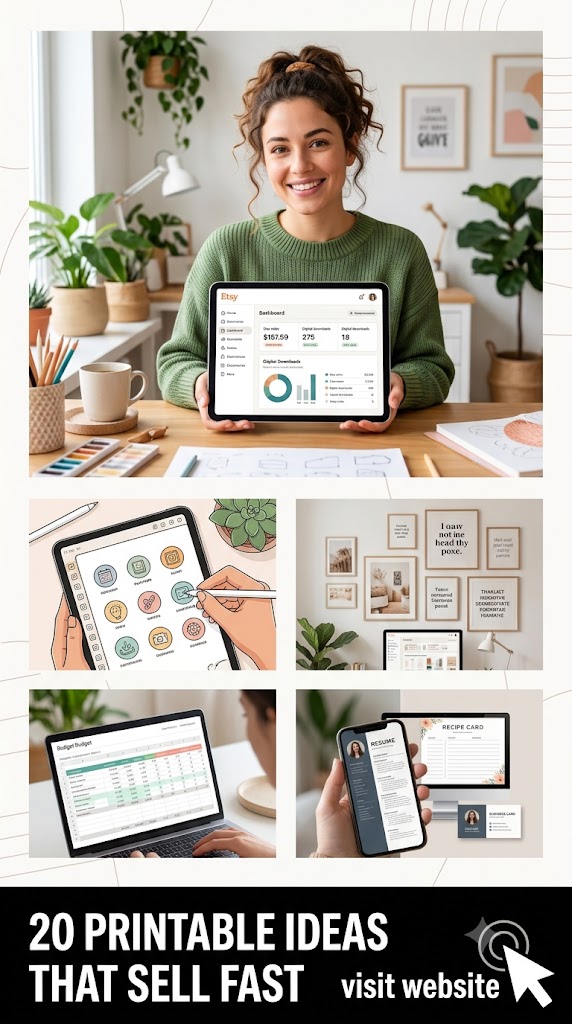
- 4. Create and Sell Digital Products
- Earn recurring revenue by selling eBooks, templates, printables, online courses, stock photos, or digital downloads.
- 5. Start a Profitable Blog
- Build a niche website that generates income through ads, affiliate marketing, and sponsored content.
- 6. Earn Through Affiliate Marketing
- Promote trusted products and services to earn commissions from every qualified sale or lead.
- 7. Invest in Index Funds for Long-Term Growth
- Learn why low-cost index funds are a popular strategy for growing wealth with minimal effort.
- 8. Build a YouTube Channel That Earns 24/7
- Create evergreen videos that continue generating ad revenue, affiliate sales, and sponsorship opportunities.
- 9. License Your Creative Work
- Monetize photos, music, videos, illustrations, or designs through licensing and royalty payments.
- 10. Launch an Online Course
- Turn your knowledge into a course that students can purchase repeatedly without additional work.
- 11. Rent Out Assets You Already Own
- Generate extra income by renting spare rooms, vehicles, equipment, or storage space.
- 12. Use High-Yield Savings and Fixed-Income Investments
- Put idle cash to work through interest-bearing accounts, certificates, or government-backed investments.
- 13. Reinvest Your Earnings
- Use compounding by reinvesting dividends, interest, and profits to accelerate long-term wealth.
- 14. Avoid Common Passive Income Mistakes
- Learn the biggest pitfalls, including unrealistic expectations, poor diversification, and neglecting maintenance.
- 15. Build Your First Passive Income Portfolio
- Combine multiple income streams into a balanced strategy designed for stability and sustainable growth.
- Conclusion
- Building wealth through passive income doesn’t happen overnight, but consistent investing, smart planning, and multiple income streams can create lasting financial security. Start with one strategy, reinvest your earnings, and expand gradually to achieve long-term financial freedom.
3. Real Estate Investment Trusts (REITs)
REITs allow you to invest in large-scale real estate without ever picking up a hammer or dealing with a tenant. These companies own shopping malls, apartment complexes, and data centers. By law, they must distribute 90% of their taxable income to shareholders.
- Pros: Highly liquid (you can sell them like stocks); high yields.
- Cons: You don’t get the same tax advantages as physical real estate.
4. High-Yield Savings Accounts (HYSA) and CDs
While not “wealth-building” in the aggressive sense, HYSAs are the safest form of passive income. In high-interest-rate environments, keeping your emergency fund in a 4-5% APY account is a zero-risk way to beat inflation.
Part III: Real Estate: The Classic Wealth Creator
Real estate has created more millionaires than perhaps any other asset class. It offers four ways to win: cash flow, appreciation, tax write-offs, and loan paydown.
5. Long-Term Residential Rentals
Buying a single-family home or multi-family property and renting it to long-term tenants is the gold standard.
- The Goal: Ensure the rent covers the mortgage, taxes, insurance, and maintenance, leaving a “net spread” of profit.
- Automation: Hire a property management company (typically for 8-10% of the rent) to make this truly passive.
6. Short-Term Rentals (Airbnb/VRBO)
If you own property in a high-demand area, short-term rentals can generate 2x to 3x the revenue of a long-term lease.
- Strategy: Focus on “experience” properties. A unique cabin or a beachside condo performs better than a standard suburban home.
7. House Hacking
This is the ultimate “starter” strategy. Buy a multi-unit property (like a duplex), live in one unit, and rent out the others. The tenants essentially pay your mortgage, allowing you to live for free while building equity.
8. Real Estate Crowdfunding
Platforms like Fundrise or RealtyMogul allow you to pool your money with thousands of other investors to fund massive commercial projects or residential portfolios. You can start with as little as $500.
Part IV: The Digital Asset Empire (High Effort, Low Capital)
The internet has democratized wealth. You no longer need a bank loan to build an asset; you just need a laptop and a high-value skill.
9. Content Creation (Blogging & Niche Sites)
By creating a website that solves specific problems or provides information, you can attract “organic traffic” from Google.
- Monetization: Once you have traffic, you earn through display ads (Mediavine/AdThrive) and affiliate links.
- The Long Game: A well-written article can earn money for 5+ years without being updated.
10. Affiliate Marketing
This involves promoting other people’s products and earning a commission on every sale made through your link.
- Pro Tip: Don’t just promote anything. Focus on high-ticket items (software, luxury goods) or recurring subscriptions (SaaS) where you get paid every month the customer stays active.
11. Online Courses and Digital Products
If you are an expert at something—coding, sourdough baking, tax law, or dog training—you can package that knowledge.
- The Format: PDF guides, video masterclasses, or templates (Excel, Notion, Canva).
- Scalability: You build the course once, and you can sell it 10,000 times with zero additional manufacturing costs.
12. YouTube Channels
YouTube is the world’s second-largest search engine. While it takes significant effort to monetize (1,000 subscribers and 4,000 watch hours), a library of “evergreen” videos can provide a steady stream of AdSense revenue and sponsorship deals for years.
13. Print-on-Demand (POD)
Upload designs to platforms like Redbubble, Printful, or Amazon Merch. When someone buys a shirt or mug with your design, the platform prints and ships it. You take a royalty. You never hold inventory or handle shipping.
Part V: Automated Business Systems
Some businesses are more “hands-off” than others. The goal here is to build a system that works without your physical presence.
14. Vending Machines and ATMs
This is “unsexy” passive income. Buying a route of vending machines or ATMs in high-traffic locations (laundromats, hotels, barber shops) provides consistent cash flow.
- Maintenance: You only need to restock or collect cash once every week or two, or you can hire someone to do it for you.
15. Car Sharing (Turo)
If you have a car that sits idle, you can list it on Turo—the Airbnb for cars. In high-demand cities, a single car can cover its own payment and insurance while netting several hundred dollars in profit.
16. Storage Unit Facilities
Storage units are often more profitable than residential real estate because they require almost zero maintenance. There are no toilets to fix and no carpets to clean. With digital keypads, the entire process can be automated.
17. Licensing Music or Photos
If you are a creative, you can list your photos on Shutterstock or your music on Epidemic Sound. Every time a creator or company uses your work, you get a small royalty fee.
Part VI: Peer-to-Peer (P2P) Lending and Crypto
For those with a higher risk appetite, the “DeFi” (Decentralized Finance) and P2P spaces offer unique yields.
18. P2P Lending
Platforms like Prosper allow you to act as the bank. You lend small amounts of money to individuals for debt consolidation or home improvement, and they pay you back with interest.
- Risk: There is a risk of default, so it’s vital to spread your investment across hundreds of “notes.”
19. Crypto Staking and Yield Farming
In the world of cryptocurrency, you can “stake” your coins to help validate the network. In exchange, you receive new coins as a reward.
- Stablecoin Lending: You can lend “stablecoins” (pegged to the USD) on various platforms to earn yields that often far exceed traditional savings accounts.
Part VII: Turning Active Income into Passive Income
The biggest mistake people make is thinking they can start with 100% passive income. Most wealth journeys follow a specific sequence:
- Maximize Active Income: Get a raise, freelance, or start a side hustle.
- Keep Expenses Low: Avoid “lifestyle creep.”
- The Investment Bridge: Take the surplus from your active income and “buy” your way into passive assets.
The 4% Rule
To know how much passive income you need, use the 4% rule. If you want $50,000 a year in passive income to live on, you need a portfolio of roughly $1.25 million ($50,000 x 25). This might seem daunting, but when you combine multiple streams—dividends, rentals, and digital sales—the number becomes much more achievable.
Part VIII: Common Pitfalls and How to Avoid Them
1. The “Set It and Forget It” Myth
Almost no passive income stream is 100% passive forever. Buildings need repairs. Websites need security updates. Stock portfolios need rebalancing. Expect to spend a few hours a month “managing the managers.”
2. Diversification Overload
Don’t try to do 10 of these at once. You will fail at all of them. Pick one strategy that aligns with your current resources (Time vs. Money) and master it until it produces $1,000 a month. Only then should you move to the next.
3. Ignoring Taxes
Passive income is taxed differently. Dividends may be “qualified” (lower tax rate), while short-term rental income is often “ordinary income.” Consult with a tax professional to set up structures like LLCs or S-Corps to protect your earnings.
4. High-Yield Traps
If an investment promises 20% or 30% annual returns with “no risk,” it is likely a scam or a highly volatile bubble. If it sounds too good to be true, it usually is. Stick to proven assets with a track record.
Part IX: The Step-by-Step Action Plan
Ready to start? Follow this 90-day roadmap:
Month 1: The Audit & Education
- Analyze your finances. How much “seed capital” can you invest each month?
- Identify your skills. Could you write? Are you good with numbers?
- Pick one strategy (e.g., Dividend Investing or Blogging).
Month 2: The Setup
- Open the necessary accounts (Brokerage, Hosting, LLC).
- Create your first “unit” of value. Buy your first share, write your first 10 articles, or research your first rental market.
Month 3: The Iteration
- Analyze the initial results.
- Reinvest any early earnings back into the asset.
- Focus on consistency. Passive income is a marathon, not a sprint.
Part X: The Psychology of Wealth
Building wealth is 20% head knowledge and 80% behavior. Most people quit three months before their “flywheel” starts to spin on its own.
The “S-Curve” of growth explains that in the beginning, you put in a lot of effort for very little reward. However, there is a “tipping point” where the effort decreases and the rewards skyrocket. This is the power of compounding.
Passive income isn’t just about the money. It’s about Time Sovereignty. It’s about the ability to say “no” to a job you hate, “yes” to a family vacation, and “always” to your own creative passions.
Conclusion: Start Today
The best time to start building a passive income stream was ten years ago. The second best time is today. Whether you start by putting $50 into a dividend stock or spending two hours tonight outlining your first e-book, the key is to move from the role of a consumer to the role of an owner.
Stop trading your hours for dollars. Start building machines that work for you. Your future self—the one enjoying a coffee on a Tuesday morning while the bank notifications roll in—will thank you.
Which strategy will you choose to start your journey? Pick one, commit to it for one year, and watch your financial reality transform.