
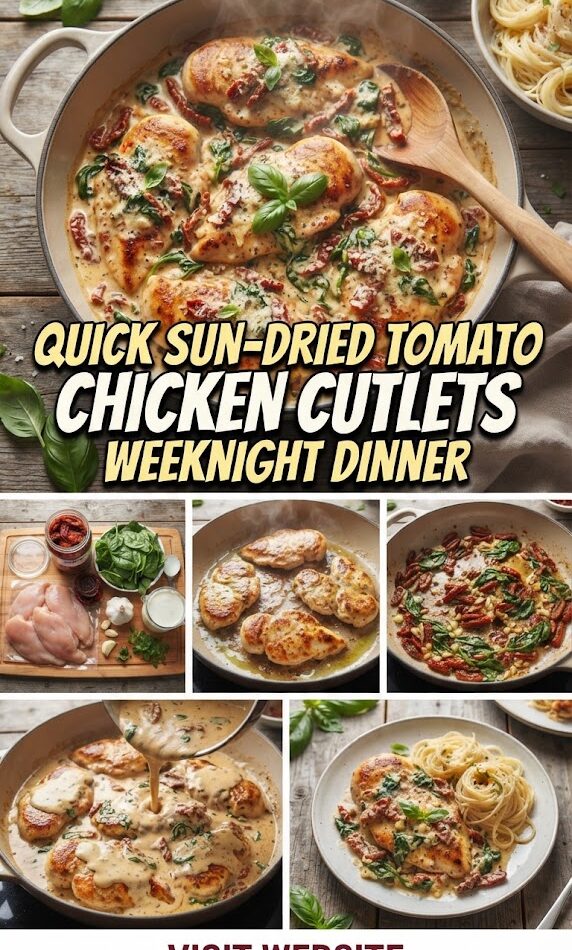
In the fast-paced world of modern living, the “weeknight dinner” often feels like a battlefield. Between professional commitments, family responsibilities, and the desperate need for a moment of peace, the kitchen can sometimes feel like a chore rather than a sanctuary. However, every once in a while, a recipe comes along that bridges the gap between gourmet excellence and lightning-fast efficiency. Enter the Quick Sun-Dried Tomato Chicken Cutlets.
This dish is not merely a meal; it is a sensory experience. It combines the crisp, golden-brown texture of perfectly seared chicken with the intense, umami-rich sweetness of sun-dried tomatoes, all tied together by a velvety sauce that demands to be mopped up with a piece of crusty bread. Whether you are cooking for a family of four or looking for an impressive date-night meal that doesn’t keep you at the stove for hours, this recipe is your new secret weapon.
Why Sun-Dried Tomato Chicken Cutlets are the King of Weeknight Dinners
When we analyze what makes a recipe “perfect” for a Tuesday night, we look for three things: speed, accessibility, and flavor density. These chicken cutlets hit the trifecta.
- Efficiency of the Cutlet: Unlike thick chicken breasts that take forever to cook and often dry out on the outside before the center is done, cutlets are thin. They cook in a matter of minutes, ensuring the meat remains succulent and tender.
- The Flavor Punch of Sun-Dried Tomatoes: Sun-dried tomatoes are essentially “flavor bombs.” By removing the water content through solar drying, the sugars and acids in the tomato become concentrated. This provides a depth of flavor that usually takes hours of simmering to achieve in a traditional sauce.
- One-Pan Cleanup: Most versions of this dish can be prepared in a single large skillet. Fewer dishes mean more time relaxing after dinner.
The Anatomy of the Perfect Chicken Cutlet
To master this dish, one must first understand the foundation: the chicken.
Sourcing Your Poultry
For the best results, look for air-chilled chicken breasts. Water-chilled chicken often releases excess moisture in the pan, which prevents that coveted golden-brown crust (the Maillard reaction) from forming. If you can find organic or pasture-raised chicken, the flavor profile will be significantly richer.
The Art of the Cutlet
A “cutlet” is simply a chicken breast that has been sliced thin or pounded out. You have two options here:
- The Butterfly Method: Lay the breast flat on a cutting board, place your hand on top, and carefully slice through the middle horizontally.
- The Pounding Method: Place the chicken between two sheets of plastic wrap or in a heavy-duty freezer bag. Using a meat mallet or the bottom of a heavy skillet, gently pound the meat until it is an even 1/4-inch thickness.
Consistency is key. When the meat is an even thickness, it cooks at an even rate, preventing the dreaded “rubber chicken” scenario where one side is overdone while the other is raw.
Essential Ingredients: Building the Flavor Profile
To reach the 3500-word level of culinary mastery, we must look beyond the basic grocery list and understand why each ingredient matters.
The “Red Gold”: Sun-Dried Tomatoes
There are two main types: those packed in oil and those sold dry in bags. For this specific recipe, oil-packed sun-dried tomatoes are superior. The oil they sit in is infused with the essence of the tomato and often herbs like rosemary or oregano.
- Chef’s Tip: Don’t throw away that oil! Use a tablespoon of it to sear the chicken for an extra layer of flavor.
The Aromatics: Garlic and Shallots
While yellow onions work in a pinch, shallots offer a more refined, delicate sweetness that doesn’t overpower the sun-dried tomatoes. Garlic should be fresh—avoid the pre-minced jars, which can taste metallic and bitter.
The Liquid Base: Chicken Stock and Cream
To create the luscious sauce, you need a balance of acidity and fat.
- Chicken Stock: Use a low-sodium version so you can control the salt levels.
- Heavy Cream: This provides the “velvet” texture. For a lighter version, you can use half-and-half, but the sauce will be slightly thinner.
- White Wine (Optional): A splash of dry Pinot Grigio or Sauvignon Blanc to deglaze the pan adds a sophisticated acidity that cuts through the cream.
The Herbs and Finishing Touches
Fresh basil is the traditional choice, offering a peppery, sweet finish. Fresh parsley can add a bright, grassy note. Finally, a sprinkle of high-quality Parmesan cheese (Parmigiano-Reggiano) adds the necessary saltiness and helps thicken the sauce naturally.
The Step-by-Step Culinary Blueprint
Step 1: Preparation and Dredging
Season your chicken cutlets generously with kosher salt, freshly cracked black pepper, and perhaps a pinch of dried oregano or Italian seasoning. Lightly dredge the cutlets in all-purpose flour, shaking off the excess. This thin coating of flour serves two purposes: it creates a beautiful crust and acts as a thickening agent for the sauce later on.
Step 2: The Searing Phase
Heat a large skillet (stainless steel or cast iron is best) over medium-high heat. Add a mixture of olive oil and a small knob of butter. Once the butter is foaming, lay the cutlets in. Do not crowd the pan. If necessary, work in batches.
Cook for 3–4 minutes per side until golden brown. Once finished, remove the chicken to a plate and tent loosely with foil. The chicken doesn’t need to be 100% cooked through at this stage, as it will finish in the sauce.
Step 3: Building the Flavor Foundation
In the same pan (don’t wash it!), add your minced shallots. The moisture from the shallots will help lift the “fond”—those flavorful brown bits stuck to the bottom of the pan. After 2 minutes, add the garlic and the sliced sun-dried tomatoes. Sauté until the garlic is fragrant but not burnt.
Step 4: Deglazing and Simmering
Pour in your white wine or a splash of chicken broth. Use a wooden spoon to scrape the bottom of the pan vigorously. This is where the magic happens. Let the liquid reduce by half.
Step 5: The Creamy Transition
Lower the heat to medium-low and pour in the heavy cream and the remaining chicken stock. Stir in your grated Parmesan. Let the sauce simmer gently for 3–5 minutes until it begins to thicken and coat the back of a spoon.
Step 6: The Reunion
Place the chicken cutlets (and any juices that collected on the plate) back into the simmering sauce. Let them cook for another 2–3 minutes. This allows the chicken to reach a safe internal temperature of 165°F (74°C) while soaking up the creamy, tomato-infused goodness.
Step 7: The Garnish
Turn off the heat. Scatter fresh basil leaves over the top and add a final squeeze of fresh lemon juice. The lemon juice is vital—it “wakes up” the heavy flavors and provides a bright finish.
The Science of the Sizzle: Why This Dish Works
Cooking is as much chemistry as it is art. The success of the Sun-Dried Tomato Chicken Cutlet lies in the Maillard Reaction. This is the chemical reaction between amino acids and reducing sugars that gives browned food its distinctive flavor. By dredging the chicken in flour and searing it at a high temperature, you are creating hundreds of different flavor compounds that didn’t exist in the raw meat.
Furthermore, the sauce utilizes emulsification. When you stir the cheese and cream into the reduced stock and wine, you are creating a stable mixture of fat and water. The starch from the flour on the chicken helps stabilize this emulsion, ensuring your sauce is smooth rather than broken or oily.
Dietary Adaptations and Variations
One of the reasons this recipe has become a staple in American kitchens is its versatility. Here is how you can tweak it to fit various dietary needs:
1. The Keto / Low-Carb Version
To make this keto-friendly, skip the flour dredging. Instead, season the chicken and sear it directly. You can use a pinch of xanthan gum to thicken the sauce if needed, though reducing the heavy cream usually provides enough thickness on its own. Serve over zoodles (zucchini noodles) or steamed spinach.
2. The Dairy-Free/Paleo Version
Replace the heavy cream with full-fat canned coconut milk. While this adds a slight coconut hint, the strong flavors of the sun-dried tomatoes and garlic usually dominate. Substitute the Parmesan cheese with nutritional yeast for that savory, nutty “cheesy” flavor. Use ghee or avocado oil instead of butter.
3. The Spicy Kick
If you like heat, add a teaspoon of crushed red pepper flakes when sautéing the garlic. You can also use “Calabrian chili paste” for a smoky, Mediterranean heat that pairs beautifully with the tomatoes.
4. The “Marry Me Chicken” Variation
This recipe is a close cousin to the viral “Marry Me Chicken.” To lean into that trend, increase the amount of garlic and add a healthy dose of fresh thyme and oregano. The legend goes that the dish is so good, anyone you cook it for will want to propose on the spot!
Perfect Pairings: What to Serve with Your Cutlets
A great main dish deserves equally impressive sides. Because the sun-dried tomato sauce is so rich, you want sides that either complement that richness or provide a refreshing contrast.
The Starch Options
- Angel Hair Pasta: The thin strands are perfect for catching the creamy sauce.
- Creamy Polenta: A northern Italian classic. The cornmeal base provides a soft, earthy contrast to the tangy tomatoes.
- Garlic Mashed Potatoes: For the ultimate comfort meal.
- Crusty Sourdough: Essential for “scarpetta”—the Italian tradition of cleaning the plate with bread.
The Vegetable Options
- Roasted Asparagus: The slight bitterness of charred asparagus cuts through the cream.
- Sautéed Broccolini: Tossed with lemon and salt, it adds a much-needed crunch.
- Arugula Salad: A simple bed of arugula with a lemon-vinaigrette dressing provides a peppery, acidic counterpoint that refreshes the palate between bites.
Wine Pairings
When choosing a wine for this dish, look for something with enough acidity to stand up to the tomatoes but enough body to match the cream.
- Chardonnay: An oaked Chardonnay can match the creaminess of the sauce.
- Sauvignon Blanc: A crisp, high-acid white that cuts through the fat.
- Pinot Noir: If you prefer red, a light-bodied Pinot Noir won’t overwhelm the chicken.
Troubleshooting Common Kitchen Mishaps
Even experienced cooks run into trouble. Here is how to fix common issues with this recipe:
“My sauce is too thin!”
If your sauce looks like soup, don’t panic. Remove the chicken and let the sauce simmer on high for a few more minutes to reduce the water content. Alternatively, whisk a teaspoon of cornstarch with a tablespoon of cold water and stir it into the boiling sauce.
“My sauce broke/separated!”
This usually happens if the heat is too high when you add the cream or if the sauce boils too vigorously. To fix a broken sauce, try adding a splash of room-temperature cream and whisking vigorously off the heat.
“The chicken is tough.”
Tough chicken is almost always a result of overcooking. Remember, cutlets cook fast. If you’ve pounded them thin, they only need about 3 minutes per side. Use an instant-read thermometer to ensure you hit 165°F without going over.
“The garlic tastes bitter.”
Garlic burns in seconds. If your pan is too hot when you add the minced garlic, it will turn brown and bitter. Always add garlic last among your aromatics and have your liquids (wine/stock) ready to pour in immediately to lower the pan’s temperature.
The Cultural Heritage of Sun-Dried Tomatoes
While this recipe is a modern American weeknight staple, its roots are firmly planted in the Mediterranean. Sun-drying tomatoes was originally a way to preserve the summer harvest for the long winter months.
In southern Italy, particularly in regions like Sicily and Puglia, rooftops would be covered in sliced tomatoes drying under the scorching Mediterranean sun. This process didn’t just preserve them; it transformed them. The salt used in the drying process, combined with the sun’s heat, created a product that was essentially “concentrated summer.”
By bringing these tomatoes into a quick chicken dish, we are tapping into centuries of culinary wisdom regarding flavor preservation and pantry-staple cooking.
Nutrition and Health Benefits
While the “creamy” aspect of this dish might suggest it’s a “cheat meal,” it actually packs a significant nutritional punch.
- Chicken Breast: An excellent source of lean protein, essential for muscle repair and satiety.
- Sun-Dried Tomatoes: These are loaded with Lycopene, a powerful antioxidant associated with heart health and skin protection. Surprisingly, sun-dried tomatoes contain more lycopene per gram than fresh tomatoes because of the concentration process.
- Garlic: Known for its immune-boosting properties and ability to help regulate blood pressure.
- Olive Oil: A source of healthy monounsaturated fats.
To make the dish even healthier, you can double the amount of sun-dried tomatoes and spinach (if adding) and use a light touch with the cream.
Meal Prep and Storage: The Gift That Keeps on Giving
Can you make this dish ahead of time? Absolutely. In fact, many people find that the flavors develop even further after a night in the refrigerator.
Reheating Tips
The microwave is the enemy of creamy sauces; it often causes the fat to separate. The best way to reheat these cutlets is on the stovetop. Place the chicken and sauce in a skillet over low heat. Add a splash of water or chicken broth to loosen the sauce and cover the pan. Heat until the chicken is just warmed through.
Freezing
While you can freeze this dish, dairy-based sauces can sometimes change texture upon thawing, becoming slightly grainy. If you plan to freeze it, consider making the recipe up until the point of adding the cream. Freeze the seared chicken and tomato base, then add fresh cream when you reheat it.
Advanced Techniques for the Home Chef
If you’ve made this recipe a dozen times and want to take it to the next level, consider these professional tweaks:
- Brown the Butter: Before searing the chicken, let your butter cook until it turns a nutty brown color (beurre noisette). This adds a toasted, caramel-like depth to the entire dish.
- Infuse the Cream: Heat your cream separately with a sprig of thyme and a clove of smashed garlic, then strain it before adding it to the pan. This creates a subtle, layered aromatic profile.
- Use a Mix of Tomatoes: Use both oil-packed sun-dried tomatoes and halved cherry tomatoes. The fresh tomatoes will burst and create a jammy texture that complements the chewy sun-dried ones.
- The Cold Butter Finish: Professional chefs often finish their sauces with a pat of cold butter (monter au beurre) right before serving. This gives the sauce a high-gloss sheen and a rich mouthfeel.
Conclusion: The Joy of Simple Cooking
The Quick Sun-Dried Tomato Chicken Cutlets recipe is more than just a way to get food on the table. It is a reminder that you don’t need hours of prep or a culinary degree to create something truly spectacular. By focusing on high-quality ingredients and mastering a few basic techniques—like pounding chicken and deglazing a pan—you can transform a humble chicken breast into a restaurant-quality meal.
In the world of home cooking, there is a certain magic in the “30-minute meal.” It provides a sense of accomplishment and a moment of genuine pleasure at the end of a long day. So, the next time you find yourself staring at a package of chicken in the fridge, wondering what to do, reach for that jar of sun-dried tomatoes. Your taste buds—and whoever you’re sharing the table with—will thank you.
Frequently Asked Questions (FAQ)
Can I use chicken thighs instead of breasts?
Yes! Chicken thighs are more forgiving and stay juicy even if slightly overcooked. However, they will take slightly longer to sear. Ensure they are boneless and skinless for the best “cutlet” experience.
What if I don’t have white wine?
No problem. You can substitute the wine with extra chicken broth and a teaspoon of white wine vinegar or lemon juice to provide that necessary acidity.
How do I stop my chicken from sticking to the pan?
The secret is patience. When you first put the chicken in the pan, it will stick. As the proteins sear and form a crust, the meat will naturally “release” from the pan. If you try to flip it and it resists, give it another 30 seconds.
Is this dish gluten-free?
It can be! Simply use a gluten-free all-purpose flour blend for dredging, or omit the dredging step entirely. Ensure your chicken stock is certified gluten-free.
Can I add other vegetables?
Certainly. Spinach is a popular addition; toss it in at the very end until it wilts. Artichoke hearts, mushrooms, or even capers also work beautifully with these Mediterranean flavors.
Final Thoughts on Ingredients
When you shop for this recipe, remember that because there are so few ingredients, the quality of each one shines through. If you can, visit a local farmer’s market for the garlic and herbs. Buy the block of Parmesan and grate it yourself—pre-shredded cheese is coated in potato starch to prevent clumping, which can make your sauce gritty.
Cooking is an act of love, and this Sun-Dried Tomato Chicken dish is the perfect way to show that love—to your family, your friends, or even just yourself. It proves that “quick” doesn’t have to mean “compromised,” and that the best flavors are often the ones found in the simplest combinations. Happy cooking!