Building Monthly Passive Income: A Comprehensive Roadmap to Financial Freedom
The dream of “earning money while you sleep” is often dismissed as a marketing gimmick or a fantasy reserved for the ultra-wealthy. However, in the modern digital and financial landscape, passive income is not just a dream—it is a tangible, achievable reality for anyone willing to put in the initial effort, time, or capital.
Passive income is money earned with minimal ongoing labor. While the word “passive” suggests no work is involved, the reality is that most passive income streams require significant front-loaded effort or capital investment. Once the foundation is built, these systems operate with little maintenance, providing you with the most valuable resource of all: time.
In this comprehensive guide, we will explore the most effective strategies for generating monthly passive income, ranging from traditional investments to digital assets and creative endeavors.
1. The Philosophy of Passive Income: Capital vs. Sweat Equity
Before diving into the methods, it is crucial to understand the two primary paths to passive income:
Investment-Based Passive Income (Capital-Heavy)
This involves using your existing money to make more money. It requires high initial capital but very low initial time. Examples include dividend stocks, real estate, and high-yield savings.
Asset-Based Passive Income (Sweat Equity-Heavy)
This involves investing your time and skills to create an asset that pays you over time. It requires low initial capital but high initial time. Examples include writing a book, starting a YouTube channel, or building a software product.
2. Dividend-Paying Stocks: The Classic Wealth Generator
Dividend investing is perhaps the most time-tested method of generating passive monthly income. When you buy shares of a dividend-paying company, you are essentially buying a piece of their profits.
How It Works
Profitable companies often distribute a portion of their earnings to shareholders in the form of dividends. While many companies pay quarterly, you can build a portfolio of “Dividend Aristocrats” (companies that have increased dividends for 25+ consecutive years) to ensure a steady monthly flow.
Key Strategies:
- Dividend Reinvestment Plans (DRIPs): Instead of taking the cash, you automatically reinvest dividends to buy more shares, compounding your wealth.
- Focus on Yield and Growth: Look for a balance between a high dividend yield (e.g., 3-5%) and the company’s ability to grow that dividend over time.
- Monthly Dividend Stocks: Some companies, particularly Real Estate Investment Trusts (REITs) like Realty Income (O), pay shareholders every single month.
Pros:
- Truly passive once the portfolio is set.
- Potential for capital appreciation (stock price goes up).
- Highly liquid (you can sell shares instantly).
Cons:
- Requires significant capital to generate a “living wage.”
- Market volatility can affect portfolio value.
3. Real Estate: The Bedrock of Passive Wealth
Real estate has created more millionaires than almost any other industry. It offers several ways to generate monthly cash flow.
Rental Properties
The traditional way: buy a property, find a tenant, and collect rent. To make this truly passive, you must hire a property management company to handle repairs, tenant disputes, and rent collection.
Real Estate Investment Trusts (REITs)
If you don’t want to deal with “toilets, tenants, and trash,” REITs are the answer. REITs are companies that own, operate, or finance income-producing real estate. They are traded on stock exchanges, and by law, they must distribute at least 90% of their taxable income to shareholders.
Real Estate Crowdfunding
Platforms like Fundrise or RealtyMogul allow you to pool your money with other investors to fund large-scale commercial or residential projects. This allows you to enter the real estate market with as little as $500.
Short-Term Rentals (Airbnb)
While more management-intensive than long-term rentals, Airbnb can generate significantly higher monthly income. Using automated check-in systems and professional cleaning services can make this a semi-passive venture.
4. Digital Real Estate: Blogging and Niche Websites
In the 21st century, a website is just as valuable as physical land. A well-optimized niche website can generate thousands of dollars per month through various monetization methods.
How to Build a Profitable Site:
- Identify a Niche: Choose a topic with high search volume but low competition (e.g., “Ultralight backpacking gear” or “Home hydroponics”).
- Content Creation: Write high-quality, SEO-optimized articles that answer user questions.
- SEO (Search Engine Optimization): Rank your articles on the first page of Google to drive organic traffic.
Monetization Channels:
- Display Ads: Use networks like Google AdSense, Ezoic, or Mediavine to get paid every time someone views or clicks an ad.
- Affiliate Marketing: Recommend products and earn a commission on sales.
- Sponsored Content: Brands pay you to write about their products.
The Long Game
Blogging is not a “get rich quick” scheme. It typically takes 6-12 months of consistent work before you see your first $100. However, once the traffic starts flowing, the income becomes highly passive and scalable.
5. Content Creation: YouTube and Podcasting
If you prefer speaking or being on camera over writing, YouTube and Podcasting are powerful passive income engines.
YouTube AdSense
Once you reach 1,000 subscribers and 4,000 watch hours, you can monetize your videos with ads. A video you filmed three years ago can still generate monthly revenue today if it continues to receive views.
Evergreen Content vs. Viral Content
To build passive income, focus on evergreen content—videos that remain relevant for years (e.g., “How to change a tire” or “Introduction to Python programming”).
Podcasting
While podcasts are less passive than YouTube due to the need for fresh episodes, a deep archive of “evergreen” episodes can attract sponsors and listeners long after the episodes are recorded. You can also monetize through platforms like Patreon, where fans pay a monthly subscription for exclusive content.
6. Peer-to-Peer (P2P) Lending
P2P lending platforms like Prosper or LendingClub (for institutional investors) allow you to act as the bank. You lend your money to individuals or small businesses in exchange for interest payments.
How it Works:
- You choose the “risk grade” of the loans you want to fund.
- Higher-risk loans offer higher interest rates (10-15%+), while lower-risk loans offer more stability (5-7%).
- The platform handles the legalities and payment processing.
Risk Management:
The biggest risk is borrower default. To mitigate this, diversify your investment by lending small amounts (e.g., $25) to hundreds of different borrowers rather than a large amount to one person.
7. Creating and Selling Digital Products
Digital products are the “holy grail” of passive income because they have zero marginal cost. Once the product is created, you can sell an infinite number of copies without any additional production costs.
E-books (Kindle Direct Publishing)
If you have expertise in a subject or a talent for storytelling, write an e-book. Amazon KDP allows you to publish for free and reach millions of readers. You earn a royalty on every sale.
Online Courses
Platforms like Udemy, Teachable, and Skillshare allow you to host video courses. If you know how to do something—be it Excel macros, vegan cooking, or dog training—there is an audience willing to pay for that knowledge.
Digital Templates and Assets
- Canva Templates: Social media managers always need fresh designs.
- Stock Photography: Sell your photos on Shutterstock or Adobe Stock.
- Spreadsheets: Sell complex budget trackers or project management tools on Etsy.
8. Affiliate Marketing: The Power of Recommendation
Affiliate marketing involves promoting someone else’s product and earning a commission for every sale made through your unique link.
Where to Practice Affiliate Marketing:
- Your Blog: Reviewing products you use.
- Social Media: Sharing links on Instagram, Pinterest, or TikTok.
- Email Newsletters: Building a loyal audience and recommending tools that solve their problems.
Pro-Tip: The “High-Ticket” Strategy
Instead of promoting $10 books for a $0.50 commission, look for high-ticket items or SaaS (Software as a Service) products with recurring commissions. For example, if you recommend a software that costs $100/month and has a 30% recurring commission, you earn $30 every month for as long as the user stays subscribed.
9. Automated E-commerce: Print on Demand and Dropshipping
E-commerce is traditionally active work, but certain models allow for high levels of automation.
Print on Demand (POD)
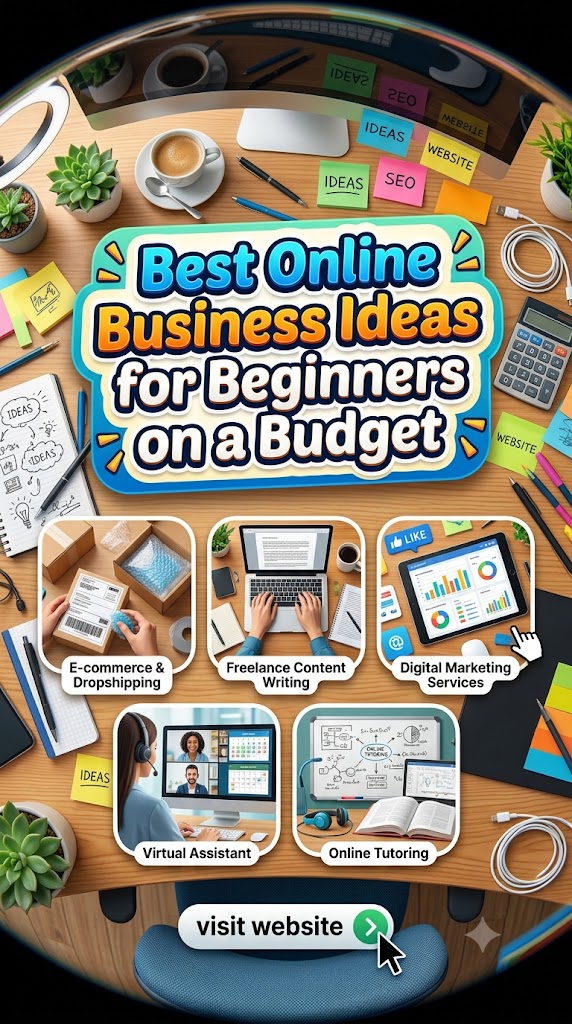
You design graphics for t-shirts, mugs, or posters and list them on sites like Redbubble or Printful. When a customer buys an item, the POD provider prints the design and ships it to the customer. You never touch the inventory; you simply collect the profit margin.
Dropshipping
You create an online store (e.g., using Shopify) and list products from a third-party supplier. When a customer orders, the supplier ships the product directly to them. Success in dropshipping relies heavily on finding the right “winning” product and mastering Facebook or TikTok ads.
10. High-Yield Savings and CDs
While not the most “exciting” method, high-yield savings accounts (HYSA) and Certificates of Deposit (CDs) are the safest way to generate passive income.
In a high-interest environment, many online banks offer 4.5% to 5.0% APY. If you have a large emergency fund or cash sitting idle, moving it to a HYSA ensures your money is at least keeping pace with (or beating) inflation.
11. Crypto Staking and Yield Farming
For those with a higher risk tolerance, the cryptocurrency world offers unique passive income opportunities.
Staking
Certain cryptocurrencies (like Ethereum, Cardano, or Solana) use a “Proof of Stake” mechanism. By “staking” your coins to help secure the network, you receive rewards in the form of additional coins.
Yield Farming and Liquidity Providing
On decentralized exchanges (DEXs) like Uniswap, you can provide liquidity by depositing pairs of tokens. In return, you earn a percentage of the transaction fees generated by that pool. Warning: This comes with the risk of “impermanent loss” and high market volatility.
12. Index Funds and ETFs: The Set-and-Forget Strategy
If you want the simplest path to long-term wealth, look no further than low-cost index funds. By buying a fund that tracks the S&P 500 (like VOO or SPY), you are betting on the growth of the top 500 companies in the US.
Historically, the stock market has returned an average of 7-10% annually. While the income isn’t “monthly” in the sense of a paycheck (unless you sell shares or receive dividends), the compounding growth creates a massive “nest egg” that you can eventually draw from using the 4% Rule.
13. Building a SaaS (Software as a Service)
This is perhaps the most difficult but most rewarding passive income stream. If you can code (or hire someone who can), building a simple software tool that solves a recurring problem can generate massive monthly recurring revenue (MRR).
Think of small Chrome extensions, Shopify apps, or simple B2B tools. These often require a lot of work to build and market, but once the user base is established, the income is incredibly stable.
14. Creating a Step-by-Step Plan for Your First $1,000/Month
You cannot build all these streams at once. Success comes from focus. Here is a sample roadmap to achieving $1,000 in monthly passive income.
Phase 1: The Foundation (Months 1–3)
- Action: Max out your high-yield savings account and start a small monthly contribution to an S&P 500 index fund.
- Goal: $10–$50/month in interest and dividends.
Phase 2: The Asset Build (Months 4–12)
- Action: Choose one “sweat equity” project. Start a niche blog or a YouTube channel. Commit to publishing twice a week.
- Goal: Reach monetization requirements (AdSense or Affiliate sales).
- Income: $100–$300/month.
Phase 3: The Scaling (Year 2 and Beyond)
- Action: Reinvest your earnings into your asset (e.g., hire a writer for your blog or a video editor for YouTube). Start exploring real estate crowdfunding or REITs with your profits.
- Goal: Diversify into 3-4 streams.
- Income: $1,000+/month.
15. The Common Pitfalls to Avoid
Many people fail in their pursuit of passive income because they fall into these traps:
- Chasing “Shiny Objects”: Switching from blogging to crypto to dropshipping every two weeks. Pick one and stick with it for at least a year.
- Underestimating the Initial Work: People quit when they don’t see results in the first month. Remember: Passive income is front-loaded.
- Ignoring Taxes: Passive income is still taxable. In many cases, it is taxed at a higher rate (self-employment tax) than traditional wages. Always consult a professional.
- Zero Diversification: Putting all your money into one “hot” stock or one YouTube channel. If the algorithm changes or the company goes bust, your income vanishes.
16. The Psychology of Passive Income: Patience and Compounding
The most important factor in building monthly passive income isn’t your technical skill—it’s your patience.
The “Snowball Effect” is real. At first, your snowball is small, and as you push it, it seems to grow at a snail’s pace. But as it gains mass (capital and assets), it begins to roll on its own, growing exponentially.
Passive income allows you to shift from “trading hours for dollars” to “owning assets that produce value.” This shift is the fundamental difference between the working class and the wealthy.
17. Conclusion: Start Today
There is no “perfect time” to start building passive income. The best time was ten years ago; the second-best time is today.
Whether you have $10 to invest in a fractional share of a dividend stock or 10 hours a week to dedicate to a niche blog, the key is consistency. Start small, stay focused, and watch as your monthly “mailbox money” transforms your financial future.
Passive income isn’t about being lazy; it’s about being smart with your resources so that you can eventually spend your life doing what you love, rather than what you have to do to pay the bills.
Summary Checklist for Success:
- Assess your current resources (Time vs. Capital).
- Choose one primary passive income stream to master.
- Set a realistic timeline (expect 6-12 months for results).
- Reinvest 100% of early profits to accelerate growth.
- Stay consistent and ignore the “get rich quick” noise.
Your journey to financial freedom starts with a single asset. What will yours be?